
Have you ever walked into a room and stood there, completely still, trying to remember why you came in the first place?
Or opened your phone—and had no idea what you were looking for? Five years ago, when my own menopause brain fog was at its worst, I asked myself those questions every single morning.
After twenty years of researching natural remedies, I made it my mission to find real, tested answers.
Today, we are putting two powerhouses head-to-head: Rosemary and Sage. The winner isn’t just one herb—it’s how you use them together.
👉 Disclaimer: This is based on my personal experience and research and is for educational purposes only. It is not medical advice. Rosemary and Sage can interact with certain medications (such as those for blood pressure or diabetes). Please speak with your doctor before adding them to your routine.
👉 Key Takeaways:
- Rosemary: The “Green Guardian” for memory. It protects acetylcholine, the brain’s crucial messenger for learning and recall.
- Sage: The “Calming Clarifier.” Specifically studied for menopause, it reduces “cognitive overstimulation” and stabilizes focus.
- The Power of Rotation: You don’t have to choose. Using them on a strategic weekly schedule provides the best results for both mental speed and emotional balance.
- Quality Matters: Always opt for organic, high-quality herbs to ensure the presence of therapeutic volatile oils like Carvacrol and 1,8-cineole.
🌿 If you’ve been feeling a little less like yourself lately, I created something for you. 💛
My free guide offers a gentle place to begin making sense of the mental fog and overwhelm — without adding another complicated routine to your day.

The Battle for Your Brain: How They Actually Work
In my twenty years of working with whole foods and herbs, I’ve learned that brain health isn’t about a “magic pill“—it’s about understanding the molecular science of these plants.
#1: Rosemary: The “Activation” Switch
Rosemary contains a potent compound called 1,8-cineole. Think of it as a key that unlocks your brain’s messenger system. It specifically protects an enzyme that breaks down acetylcholine.
When you have more acetylcholine available, your brain communicates more clearly, word retrieval improves, and that “dim light” in your mind finally turns bright.
#2: Sage: The “Emotional Anchor”
While rosemary turns the brightness up, Sage (Salvia officinalis) acts as a master regulator. For many women in perimenopause, the brain isn’t just foggy—it’s anxious and overstimulated.
Sage has a remarkable ability to soothe the cholinergic system, helping you find a level of focus that is calm, steady, and not overwhelmed.
My Proven Weekly Protocol
I don’t just use these herbs occasionally; I use them intentionally. Based on my 5-year journey through menopause, here is the weekly rhythm I recommend to move from “survival” to “mastery”:
Monday, Wednesday, Friday (Activation Days): Focus on Rosemary.
Use rosemary tea or essential oil aromatherapy. These are your days for deep work, writing, and mentally demanding tasks.
Tuesday, Thursday, Saturday (Balance Days): Focus on Sage.
Drink 1-2 cups of sage tea to settle mental noise, stabilize mood, and lift the afternoon fog gently.
Sunday (Reset Day):
A rest day for your system, or my “Memory Reset Tea” (a gentle blend of both).
Safety & Mastery: What You Need to Know
Blood Pressure: If you have high blood pressure, consult your doctor before using rosemary in high concentrations (like essential oils).
The Thujone Factor: Sage contains thujone, which should not be consumed in excessive amounts. Stick to 1-2 cups of tea per day and avoid very long periods of high consumption.
The “Vibrant” Test: If your dried herbs look dusty and gray, they are “dead.” Look for vibrant color and a sharp, peppery aroma—this tells you the medicinal oils are still active.
A Gentle Guide Back to Focus & Clarity
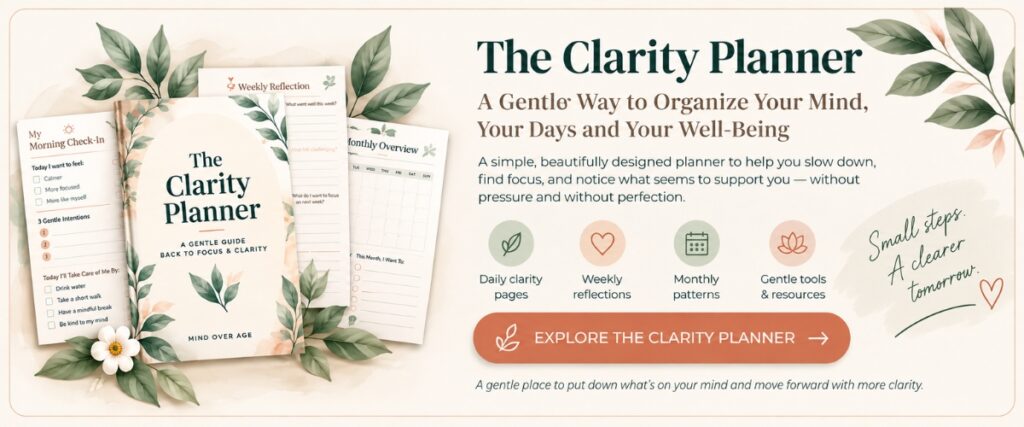
🌿 Looking for a gentle way to clear some of the mental clutter?
I created The Clarity Planner as a simple place to slow down, organize what’s on your mind, and begin noticing the patterns that may be supporting you — one day at a time.
No perfect routine required.
Just a little space to check in with yourself. 💛